
DIRECTOR'S VISION

This story is deeply personal to me. After graduating from the Academy of Fine Arts, like my protagonist, I worked commercially and, like her, I want to return to original projects. A few years ago, I began photographing imaginary crime scenes. Everything was fictional, yet each time I felt something disturbingly real. I developed an idea for a short film based on that series, followed by another about a young Ukrainian woman in Warsaw who plans revenge on her family's murderer.

The two stories began to speak to each other: one about the aestheticisation of violence, the other about real violence. I began to ask myself why a beautiful image of human suffering draws us in so strongly. This is how "All Our Ghosts" came into being. The film has retained two engines from those ideas, and I do not intend to reconcile them. Its first half is an intimate road movie about the gaze: Ewa arranges the body of a living girl into the poses of dead women and calls it mourning. The frame is composed, the lighting is set, violence always belongs to someone else and has always already happened.
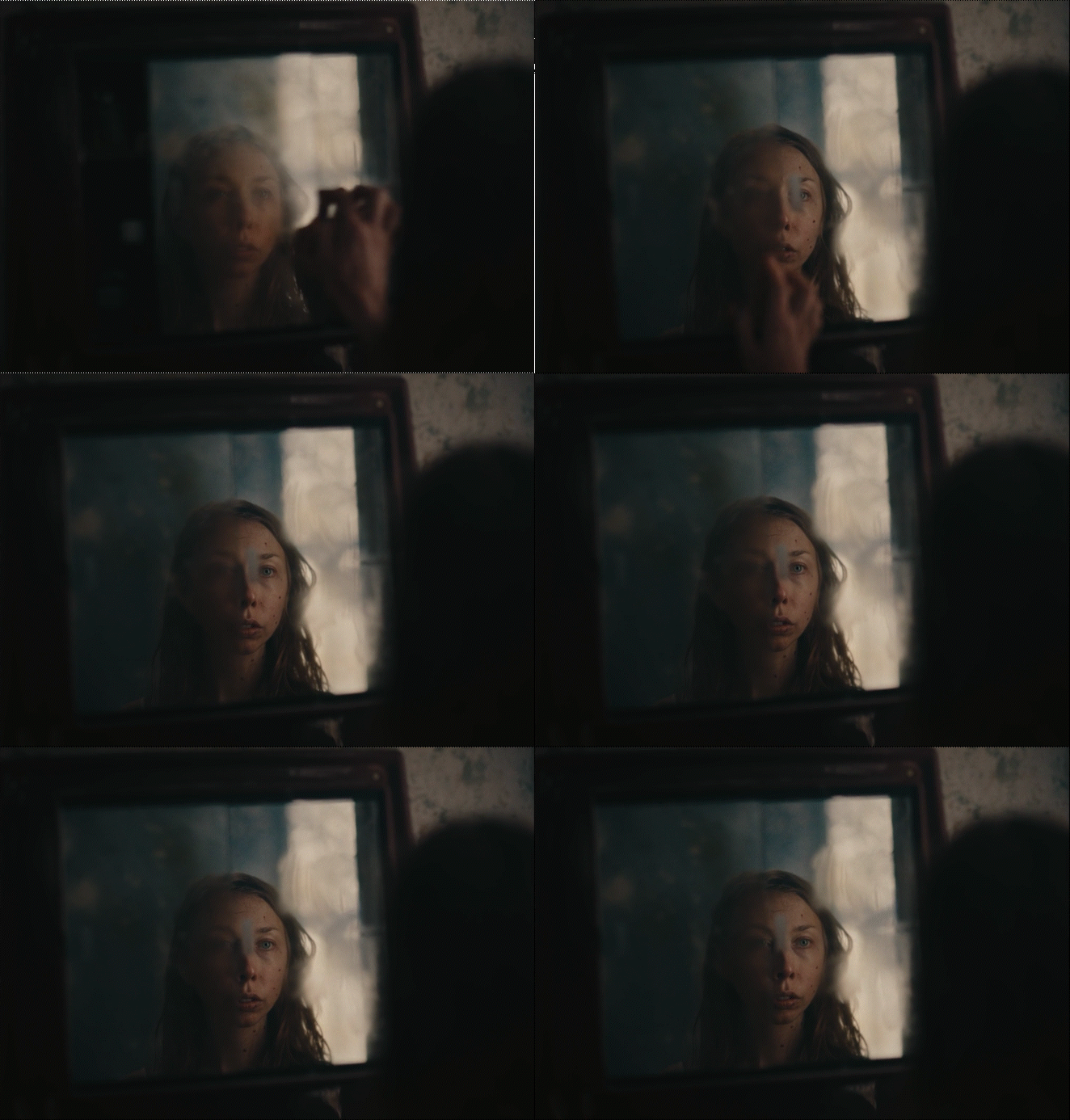
Halfway through, this convention breaks. The world that had been a backdrop, the war beyond Poland’s eastern border; sabotage on Polish railways; a man explaining to a Ukrainian woman that the war is a misunderstanding - all of it enters the frame. I am interested precisely in the moment when the film changes genre in front of the viewer. Oliver Laxe does it in "Sirāt"; Lynch did it too: the agreement made in the first act is broken, and the protagonists have to complete their arcs in a different film from the one in which they began.

War is not a decoration here. It genuinely shapes the relationships and actions of the characters. Andriej is not a genre antagonist. He is a lonely, drunk young man who wants to get married and believes the propaganda he has absorbed. He dies from a single push, by accident. The violence both protagonists were running from reaches them not as a dramatic climax, but almost by accident.

I do not grant Ewa and Natasza absolution in the film. The railway sabotage happens anyway, its perpetrators remain at large, and their private act of justice changes nothing except themselves. Ewa gets an exhibition. Natasza returns to her own war. On the wall of a Berlin gallery hangs a photograph of the crime Ewa took part in, and no one but her knows it. The curator tells her that art rarely provides the catharsis we seek. That is the thought I want the audience to leave the cinema with, rather than a sense of relief.


